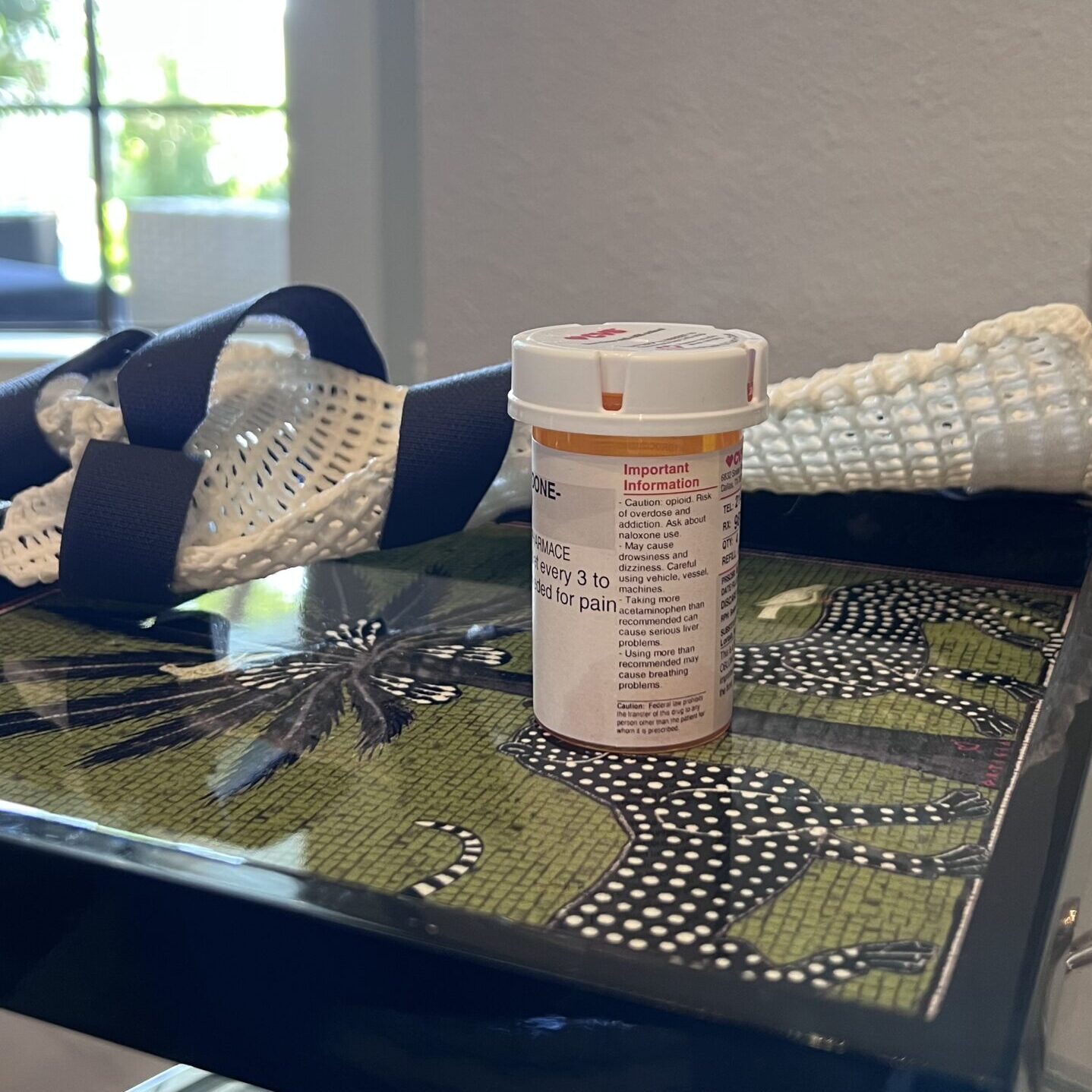
I was born in a North African immigrant family in France, where, from a very young age, I faced racial abuse, physical and verbal, sometimes from teachers. It came as no surprise when I was later diagnosed with depression, with a side of complex Post Traumatic Stress Disorder Disorder, (PTSD). I learned much later that PTSD sufferers often routinely dissociate from their bodies as a coping mechanism against pain until dissociation inevitably becomes a maladaptive behavior, preventing them from listening to their bodies. What shocked me the most was being the first in my family to test positive for Hashimoto’s, Sjogren’s syndrome, and Rheumatoid Arthritis (RA). You may think I am unlucky to have not one but three autoimmune diseases; however, having more than one of those is very common, and the symptoms often overlap. The trick is to spot the signs before your body sustains irreparable
damage, and you mentally and physically fall apart.
Six months after my son was born, in London, my weight kept climbing, I was constantly exhausted, still losing hair, my face was swollen, and I was waking up with painfully swollen fingers. Although all new mothers experience tiredness and hair loss, I knew something was seriously off. I visited the doctor twice in the first six months of my son’s life, and I spoke to nurses only for them to tell me everything I was feeling was normal without running any tests. Every time I sat in the examination room, medical professionals would take one look at my medical history, see depression, and conclude I was just another struggling first-time mother and send me off with an iron supplement prescription. A friend I hadn’t seen in months eventually told me I looked terrible, so I flew to France to get a check-up. The French doctor not only told me to go on a diet, but he also advised me to get a tummy tuck, which left me even more self-conscious. Fortunately, he still ordered some blood tests, “just in case”. It turned out my thyroid had utterly failed, and the doctor was amazed I had been coping on my own and breastfeeding. I felt both relieved and angry about being gaslighted by my first doctor and complained to his practice, whose manager seemed uninterested. I rightfully feared my history of depression would forever follow and discredit me, that when baffled by my symptoms, doctors would attribute them all to depression. I felt I didn’t have a voice. I stopped trusting medical staff, telling them when I was feeling low and sometimes hid my history of depression altogether to compel doctors to dig deeper (I am not saying you should). The Thyroid medication worked like a dream; I deflated, and my hair grew back.
My second baby was only eighteen months younger than my eldest; she wouldn’t sleep through the night, fatigue and brain fog took over until, one day, I broke and landed myself in the ER. Like in an episode of Dr House, I was simultaneously diagnosed with acute tonsillitis, acute gallbladder infection, and the milk I pumped from my hospital bed turned green. Less than a month after my hospital stay, I started limping. Most of the joints in my body began to swell and became painful, severely restricting my range of motion. As a mother, responsible for a baby and a toddler, I panicked and privately booked an appointment with a reputable rheumatologist, who asked me to raise my arms. When I told him it was excruciatingly painful, he insisted, and so I did. He concluded I didn’t have acute reactive arthritis (ARR), despite ARR being relatively common after a major infection, and told me to take over-the-counter painkillers. I went back home feeling vindicated and became clinically depressed again. I was too busy to look for a second opinion until one day, my son got hurt, and I took him to the ER. While the doctor gave him a clean bill of health, he noticed how I was holding my baby daughter; my movements were as awkward as the Tin Man’s in The Wizard of Oz. Everything hurt. I showed him the weird red bumps in the palm of my hands and told him it had all been dismissed by the rheumatologist. Luckily for me, that doctor was Nigerian and had treated many people in Africa who had developed ARR because they hadn’t had access to antibiotics on time. He reassured me it was temporary and that corticosteroids would fix it, but advised me to see another Rheumatologist, who ran all the tests, revealing both Sjogren’s and RA. The satisfaction of being heard and having proof that my symptoms were real quickly gave way to anxiety. These are degenerative diseases, and I subsequently met women my age or younger who had to endure hip replacement surgery or ended up hospitalized with pneumonia because the medicine compromised their immune system. I took everything the doctor told me to; the side effects were multiple and included depression and hair loss. RA hung over my head like the Damocles’ sword, as nobody could predict when the next RA flare-up would come, which led to depression and anxiety following me long after I felt better.
My mobility was greatly affected, but my husband travelled a lot for work, so I would plaster a smile on my face, attend school events, and watch from the sidelines, unable to volunteer. When I tried to explain that my body was at war with itself, that joint pain is only one of the symptoms, people would bring up their grandparents having the same issue. They inevitably confuse the wear and tear of Osteoarthritis with the systemic disease that is RA. I gave up and felt increasingly isolated. I summoned all my energy to attend my son’s sports day, hiding my limp, and arrived early. A volunteer mother, spotting me, shouted:
“Hey, you, who are doing nothing, come and load the Nerf guns!”
I felt humiliated. I didn’t want to tell her it took over an hour in the morning to uncurl my fingers, that they required painful injections in the knuckles because I had learned no amount of explanation would gain any sympathy. So I did load the Nerf guns and nursed my hand for the whole following week. Many autoimmune diseases are invisible, their symptoms elusive, often to doctors as well, which is why it takes an average of seven years from the onset to get diagnosed with RA. A doctor told me it’s because I looked too well and I didn’t fit the demographics. Except I totally did, as most women are diagnosed between 30 and 50. After I heard the story of Serena Williams almost dying in childbirth because she was black, I remembered all the times I was ignored because of my status, a brown woman with an accent.
I upped my depression medication and tried hard to exercise to slow down the progress. After moving from Europe to Africa and then to the USA, I felt homesick twice, despite my British rheumatologist’s letter. However, my new rheumatologists wouldn’t believe me until the blood work came back. They wouldn’t because of my history of mental illness. I was also slim, I didn’t cry, and presented altogether too well. Looking back at my previous life, I hadn’t considered all these people battling invisible autoimmune disorders. Fast forward a few summers ago, and I could tell from the swollen, red knuckles of a young woman nursing a drink. We now trade tips.
Perhaps you already know that the medicines used to prevent the body from attacking itself, compromising its immune system, also reduce the body’s ability to fight infections. The medicines people like me take include chemotherapy drugs. Therefore, as soon as the pandemic reached the US, where I live, I decided to keep my children home before the schools even announced their closure. Resenting those protesting against wearing a mask, peddling conspiracy theories, I spent over a year sheltering in place, praying, and waiting for the COVID-19 vaccine. I became a teacher and a playmate. We felt like castaways on a tiny island, only leaving the house for doctors’ appointments. Once more, isolated from friends and society, I dug deep into my mental health toolbox to support the children and try to keep my head above water.
I still struggle to get out of bed at times and, like a health insurance employee bluntly told me, “It’s not like [I’m] going to get better, is it?” – Yes, she was trying to get rid of me as a client. Yet, I am grateful for my autoimmune diseases because what I gained from them far outweighs what I have lost and helped me grow. I’m learning to listen to my body. I became my own advocate. I learned to pace myself, give others the benefit of the doubt, be more compassionate and patient, and, most importantly, to be more grateful for my financial privileges.