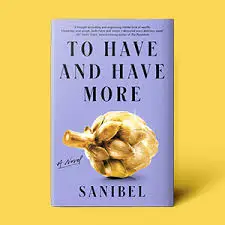
On the surface, To Have and to Have More is a story set in an elite boarding school, centered on a complicated friendship between two American girls from radically different circumstances. Emery is an upper-class student whose elderly parents adopted her from Korea. Lilah is the academically gifted daughter of Chinese immigrants. Their connection is intense, magnetic, and often uneasy—shaped as much by affection as by what they don’t fully understand about each other’s worlds.
But this book is far more multilayered than its premise suggests. Sanibel captures the in-between state of adolescence with striking accuracy: teenagers who are still oscillating between childhood and young adulthood, capable of saying something childish one minute and then landing on a startlingly philosophical insight the next. The emotional range feels true—messy, sharp, tender, contradictory—and the boarding school setting becomes a pressure cooker where status, belonging, and identity are constantly being negotiated.
What makes the novel stand out is the way Sanibel threads larger themes through the intimate scale of teenage life. Without flattening her characters into “issues,” she explores socioeconomic inequality and race (for lack of a better word) with nuance and bite. The book quietly but powerfully shows how privilege shapes perception, how scarcity shapes ambition, and how both can distort friendship—even when the bond is real.
The story resonated with me personally as the daughter of Moroccan immigrants in classrooms where most children were affluent, white, and Christian. I recognized that awareness of difference—the subtle comparisons, the unspoken codes, the racially motivated micro-aggressions, sometimes from adults, the feeling of simultaneously earning your place and never quite belonging. Sanibel doesn’t just depict those dynamics; she makes you feel them.
Ultimately, To Have and to Have More is a coming-of-age novel with a sharp edge: emotionally precise, socially observant, and deeply human. It’s the kind of book that lingers—not because it tells you what to think, but because it reflects a world where the rules are contingent on wealth and status. Sanibel’s prose flows, imbued with adroit humour and refreshing in its reflection of the complexity of the human psyche.